
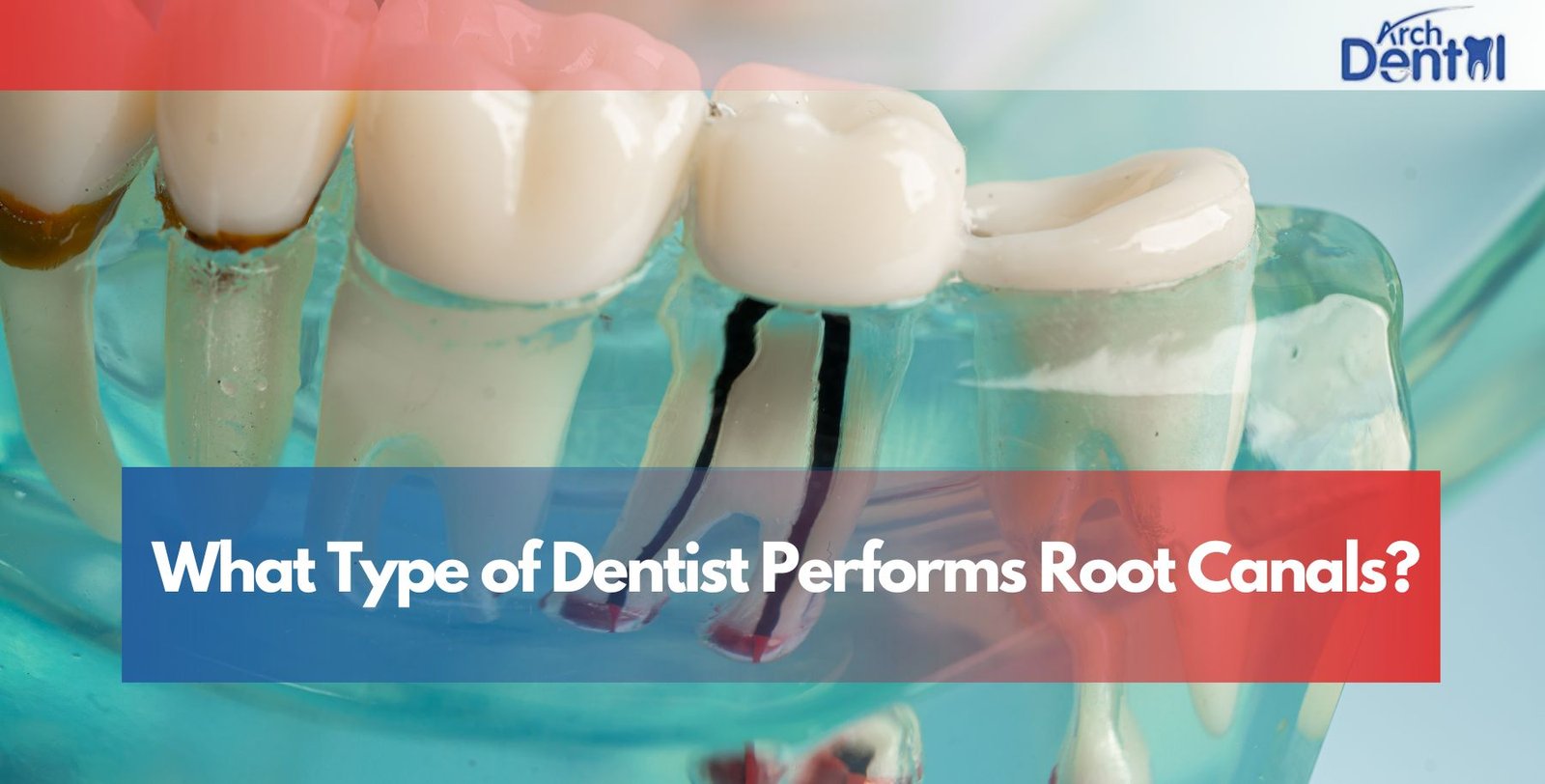
When a tooth becomes infected, painful, or severely decayed, patients often hear one recommendation root canal therapy. But many people wonder: What type of dentist actually performs a root canal? Is it your general dentist, or do you need a specialist? Understanding who performs this essential treatment, when a specialist is needed, and how to choose the right provider helps reduce anxiety and ensures you receive the highest level of care.
A root canal is a sophisticated dental procedure designed to remove infected or inflamed pulp from inside a tooth. It relieves severe tooth nerve pain, stops the spread of infection, and preserves your natural tooth. Because every case is unique, knowing which dental professional is best suited for your situation is incredibly important.
This comprehensive guide explores everything you need to know about the types of dentists who perform root canals, the differences in training, what skills specialists offer, and how the procedure fits into your long-term oral health plan.
Understanding What a Root Canal Actually Is
Before you can understand who performs root canals, it helps to understand what the procedure involves. A root canal is a treatment designed to eliminate infection deep inside a tooth. When bacteria reach the pulp, the nerve becomes inflamed, leading to persistent pain, swelling, and sensitivity.
Why Root Canals Are Necessary
A tooth may need a root canal due to deep decay, cracks, trauma, or repeated dental procedures. Once bacteria enter the pulp, antibiotics alone cannot solve the problem only removing the infected tissue can save the tooth.
Symptoms That Indicate a Root Canal May Be Needed
Common symptoms include intense tooth pain, sensitivity to hot or cold, swelling, gum tenderness, and discoloration. These signs often indicate infection, requiring immediate evaluation.
How Root Canal Treatment Works
During Root Canal Treatment, the dentist removes infected pulp, disinfects the canals, and seals the tooth to prevent reinfection. Afterward, the tooth is typically restored with a dental crown for long-term protection.
General Dentists — The Most Common Providers of Root Canal Therapy
Many patients don’t realize that general dentists commonly perform root canals. These are the same dentists who provide your checkups, fillings, cleanings, and restorative care. Most general dentists are trained in basic root canal procedures during dental school and through continuing education.
When a General Dentist Performs Root Canals
General dentists often perform root canals on teeth with simple anatomy typically front teeth and premolars, which have fewer canals and are easier to access. For patients with mild infections or straightforward cases, a general dentist can complete treatment efficiently and comfortably.
Advantages of Seeing a General Dentist for a Root Canal
Convenience is a major advantage. You already know your general dentist, and they know your complete dental history. They can diagnose, treat, and restore the tooth in the same office, ensuring seamless care.
When a General Dentist May Refer You
If your tooth has complex anatomy, multiple canals, deep curvature, or severe infection, a general dentist may refer you to a specialist known as an endodontist. Referral ensures the best possible outcome.
Endodontists — The Specialists in Root Canal Procedures
Endodontists are dentists who specialize exclusively in diagnosing and treating infections inside teeth. They are the top experts in root canal therapy, often receiving referrals from general dentists for complicated or high-risk cases.
What Makes Endodontists Different?
Endodontists complete two to three additional years of advanced training after dental school. Their education focuses heavily on root canal anatomy, dental pain management, surgical endodontics, and complex infection control.
Tools and Techniques Endodontists Use
Endodontists use specialized instruments such as operating microscopes, 3D imaging, ultrasonic tools, and digital scanners. These tools allow them to navigate intricate canals, remove hidden infections, and treat teeth with difficult root structures.
Types of Cases Endodontists Handle
You may be referred to an endodontist for:
• Teeth with multiple canals
• Severe infections
• Retreatment of a failed root canal
• Cracked teeth
• Dental injuries
• Calcified or curved roots
Their advanced expertise significantly increases the chances of saving the tooth.
Other Dental Professionals Involved in Root Canal-Related Care
While general dentists and endodontists perform root canals, other dental specialists may be involved in diagnosis, restorative planning, or treatment of complications.
Prosthodontists and Root Canal Tooth Restoration
Prosthodontists specialize in restoring and replacing teeth. While they rarely perform root canals themselves, they play a crucial role in designing crowns or full-mouth rehabilitation after treatment.
Oral Surgeons and Complex Extractions
If a tooth cannot be saved through a root canal, an oral surgeon may remove the tooth. They are also involved when infections spread or when surgical endodontic procedures, such as apicoectomy, are needed.
Periodontists and Gum-Related Complications
Gum infection can mimic tooth pain. Periodontists address gum disease, bone loss, and periodontal pockets that may affect the tooth before or after root canal therapy.
Why Choosing the Right Provider Matters
Root canal therapy is one of the most predictable and successful dental procedures, but success depends partly on who performs it. Choosing the right provider ensures fast relief, proper infection removal, and long-term tooth stability.
Case Complexity Matters
Simple cases usually do well with a general dentist, while complex cases benefit greatly from an endodontist’s precision and technology.
Experience Leads to Better Outcomes
Endodontists perform thousands of root canals per year—far more than general dentists—which increases accuracy, efficiency, and long-term success.
Comfort and Pain Control
Patients who experience anxiety, severe pain, or complicated infections may feel more comfortable in the hands of a specialist with advanced anesthesia skills.
How Dentists Diagnose the Need for a Root Canal
Diagnosis is an essential part of determining the right provider. Dentists carefully evaluate symptoms, imaging, and clinical tests to determine whether root canal therapy is needed.
Clinical Examination
The dentist checks for visible signs of decay, cracks, swelling, and gum tenderness. A cold or heat test helps determine if the nerve is still alive or infected.
Digital X-Rays and 3D Imaging
X-rays reveal infection deep inside the root, bone loss, and structural damage. Endodontists may use cone-beam CT scans for extremely detailed imaging.
Pain Assessment and Symptom History
The type of pain sharp, dull, throbbing, or spontaneous helps dentists identify the cause and severity of the infection.
The Root Canal Procedure — What Actually Happens
A root canal is a multi-step process designed to remove infection and restore tooth function. Understanding the procedure helps eliminate fear and uncertainty.
Step 1 — Numbing and Comfort
Local anesthesia ensures the tooth and surrounding area are completely numb. Many patients say a root canal feels similar to getting a filling.
Step 2 — Accessing the Pulp
The dentist creates a small opening in the top of the tooth to reach the infected pulp inside the canals.
Step 3 — Cleaning Out the Infection
Special instruments remove infected tissue, bacteria, and debris. The canals are disinfected thoroughly.
Step 4 — Shaping and Sealing
Once cleaned, the canals are shaped and filled with a biocompatible material that prevents reinfection.
Step 5 — Restoring the Tooth
Most teeth treated with a root canal require a crown to protect the structure and restore full function.
When a General Dentist Should Refer You to an Endodontist
Not all root canals are straightforward. A general dentist may refer you when specialized care is needed. Molars often have hidden or curved canals that require a specialist’s experience. If the infection has spread to bone or surrounding tissues, an endodontist’s advanced tools are essential. Retreatments require expert precision and imaging, best performed by endodontists.
Myths About Root Canals and Who Performs Them
Many misconceptions still surround root canals. Understanding the truth helps patients make informed decisions.
Myth — Only Endodontists Can Perform Root Canals
General dentists can perform many root canals successfully. Specialists are needed only for complex situations.
Myth — Root Canals Are Extremely Painful
With modern anesthesia and technology, root canals relieve pain—they do not cause it.
Myth — It’s Better To Pull the Tooth
Saving the natural tooth is almost always the best option. Removal can lead to bone loss, shifting teeth, or costly replacement procedures.
Benefits of Seeing the Right Provider for Your Root Canal
Choosing the correct dentist ensures a smooth experience and long-lasting results. Experts can diagnose and treat the infection quickly, relieving discomfort. Endodontists have success rates exceeding 95% for complex procedures. Root canal therapy preserves natural teeth, supporting long-term oral health and chewing function.
Finding the Best Provider for Your Needs
Choosing the right dentist depends on your symptoms, case complexity, and comfort level. They evaluate your situation and determine whether they can treat you or refer you. Endodontists are ideal when infection is advanced or anatomy is difficult. A provider’s tools and expertise significantly impact treatment comfort and success.
Root Canal Care After the Procedure
Post-treatment care ensures quick healing and long-term success. Minor soreness is normal after the procedure. Over-the-counter medications are usually sufficient. Until the permanent restoration is placed, the tooth may be weaker and sensitive. A crown strengthens the tooth and prevents future fractures or decay.
Why Root Canals Are Essential for Saving Natural Teeth
Root canals are highly effective at preserving natural teeth and preventing serious complications. Removing infection stops the need for extraction. Untreated infection can affect bone and systemic health. Once treated, the tooth functions normally and pain disappears.
Conclusion
Root canals are performed by both general dentists and endodontists, depending on case complexity. General dentists handle routine cases, while specialists manage advanced infections, complex anatomy, and retreatments. Choosing the right provider ensures comfort, accuracy, and long-term success. No matter who performs your care, timely treatment protects your natural teeth and supports lifelong oral health.
For expert evaluation and advanced endodontic care, trust a skilled Dentist in Northampton, MA.