Understanding the difference between plaque and calculus is essential for maintaining a healthy smile. Many patients assume both terms mean the same thing, but they describe two very different stages of buildup on your teeth. One is soft and removable at home; the other is hardened, damaging, and requires professional treatment. Learning how each forms, how each affects your mouth, and how to prevent them is key to avoiding cavities, gum disease, and long-term dental complications.
What Is a Dental Plaque?
Dental plaque is a soft, sticky film that constantly forms on the surfaces of your teeth. It contains bacteria, food particles, saliva proteins, and acids that cling to enamel throughout the day. Plaque builds up fastest after meals and overnight. It’s invisible at first but can create a fuzzy feeling on your teeth. Without daily cleaning, this film becomes more harmful and may lead to tooth decay or early gum inflammation.
How Does Plaque Form?
Plaque forms when oral bacteria feed on sugars and starches left behind from meals and snacks. These bacteria produce acids that mix with saliva and embed themselves in a sticky biofilm. As this film thickens, bacteria multiply rapidly, covering more enamel surfaces. Without brushing and flossing, plaque grows heavier and more acidic, increasing the risk of enamel damage and gum irritation. It is the earliest stage of buildup before hardening into calculus.
What Does Plaque Look and Feel Like?
Plaque is usually colorless or pale yellow, making it difficult to see. Most people notice plaque by its texture—it feels rough or gritty when you run your tongue along your teeth. In thicker layers, it may create a fuzzy or filmy feeling. Although it’s soft, plaque traps acids against enamel and can quickly become harmful. Left undisturbed, it begins transforming into a harder substance called calculus.
Why Is Plaque Harmful to Teeth and Gums?
Plaque constantly produces acids that erode enamel, leading to cavities. As it builds along the gumline, plaque triggers inflammation known as gingivitis. This early gum disease causes bleeding, swelling, and sensitivity. If plaque remains untouched for 24 to 72 hours, minerals in your saliva harden it into calculus, which is far more destructive and cannot be removed at home.
What Is Calculus (Tartar)?
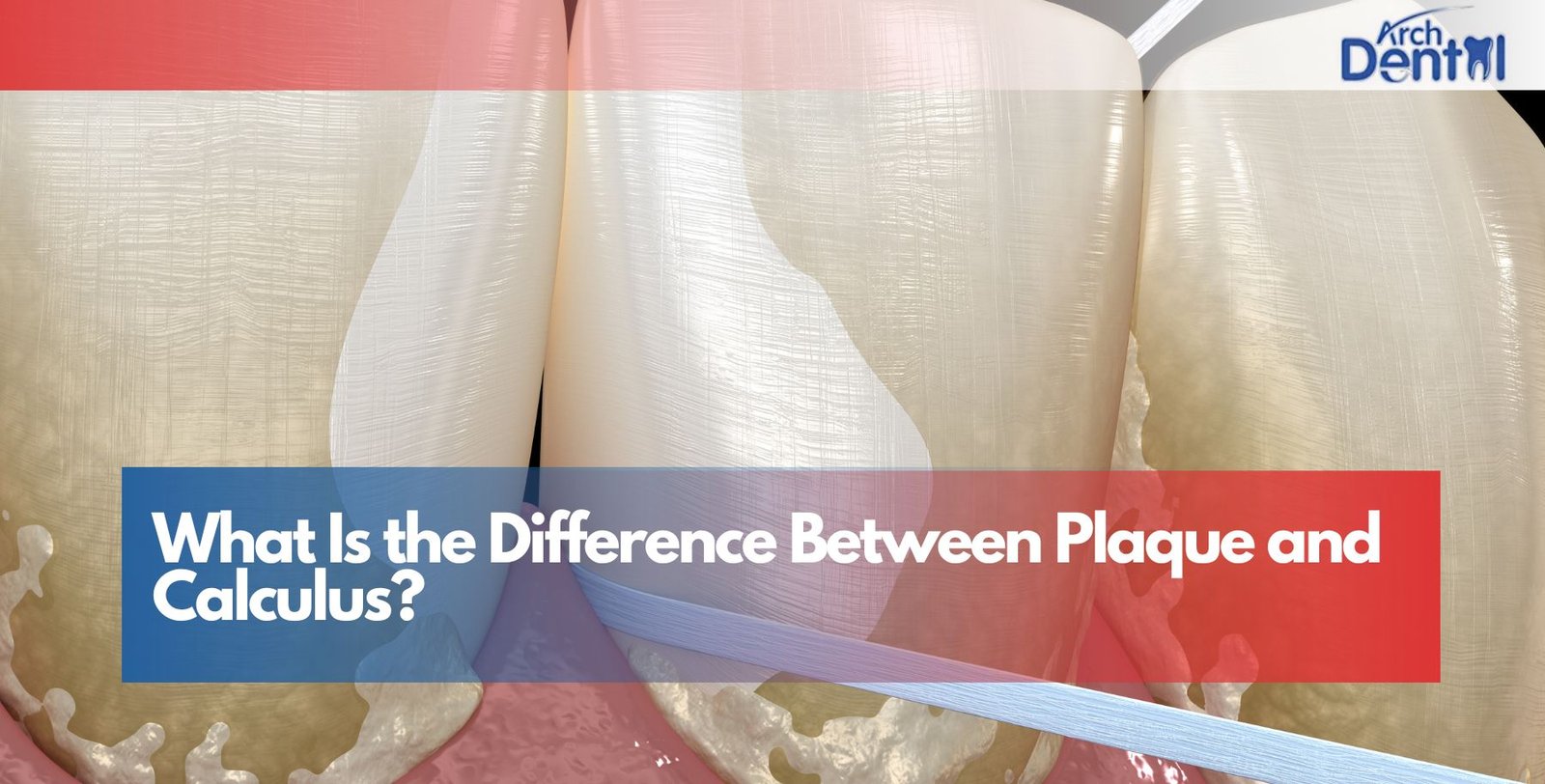
Calculus, also known as tartar, is hardened plaque that mineralizes on your teeth. Once plaque absorbs minerals like calcium and phosphate from your saliva, it transforms into a hard, crusty deposit. Calculus forms above and below the gumline and acts as a magnet for even more plaque and bacteria. Unlike plaque, calculus cannot be removed by brushing or flossing—only a dentist or hygienist can safely remove it with professional tools.
How Calculus Forms From Untreated Plaque
When plaque sits on the enamel for several days, minerals naturally present in saliva begin crystallizing within the biofilm. These crystals gradually harden, forming a dense deposit that adheres strongly to the tooth surface. Once calculus develops, brushing cannot loosen it. Instead, the rough surface allows new plaque to cling more easily, creating a cycle of buildup and increasing risk of gum disease.
What Does Calculus Look Like?
Calculus usually appears as yellow, brown, or even black hardened deposits on teeth. It often forms behind the lower front teeth and along the gumline where saliva pools. Because calculus is porous, it absorbs stains from coffee, tea, red wine, tobacco, and certain foods. This discoloration makes teeth look dull or dirty, even if you brush regularly. Below the gumline, calculus may not be visible but still causes serious gum damage.
Why Calculus Is More Harmful Than Plaque
Calculus creates an ideal environment for harmful bacteria to thrive. The rough, hardened surface allows plaque to continually accumulate, increasing gum irritation and inflammation. Over time, calculus can cause gingivitis to progress into periodontitis, a severe gum disease that destroys bone and leads to tooth loss. Because you cannot remove it at home, calculus requires regular dental cleanings to prevent long-term complications.
Key Differences Between Plaque and Calculus
Although plaque and calculus are related, they differ in texture, behavior, risk level, and treatment. Understanding the distinctions helps you recognize when at-home care is enough and when professional treatment becomes necessary.
Soft vs. Hardened Buildup
The most fundamental difference is texture. Plaque is soft, sticky, and easy to remove with brushing and flossing. Calculus is hard, crusty, and firmly attached to the tooth structure. Once plaque hardens into calculus, home care alone cannot eliminate it. This distinction is why preventive daily hygiene is so important.
Buildup Timeline and Formation Speed
Plaque begins forming immediately after you finish eating. It can turn into calculus in as little as 48 to 72 hours if not removed. Factors like saliva pH, oral hygiene habits, and diet influence how quickly the transformation happens. Calculus accumulates over weeks and months but accelerates once it forms a base layer.
Health Risks Associated With Each
Plaque primarily causes cavities and early gum irritation. Calculus, however, significantly increases the severity of gum disease because its rough surface harbors more bacteria. Untreated calculus leads to inflammation, gum recession, bone loss, loose teeth, and chronic infection. The risk level becomes much higher once plaque hardens.
How Plaque Leads to Gum Disease
Plaque not only damages enamel it also triggers gum disease, one of the most common dental issues in adults. As plaque accumulates along the gumline, the bacteria release toxins that irritate gum tissue and weaken the body’s defenses.
Early Stage: Gingivitis
Gingivitis develops when plaque remains at the gumline for too long. Symptoms include redness, swelling, tenderness, and bleeding when brushing. At this stage, gum disease is reversible with improved oral hygiene and professional cleaning. Removing plaque daily prevents gingivitis from progressing.
Progression to Periodontitis
If gingivitis is ignored, plaque hardens into calculus and continues damaging gum tissue. The gums begin pulling away from the teeth, forming pockets that trap even more bacteria. Over time, periodontitis destroys bone and increases the risk of tooth loss. Calculus removal becomes an essential part of controlling this advanced disease.
Systemic Health Risks Associated With Gum Disease
Chronic gum infection doesn’t stop at the mouth. Research shows links between periodontitis and heart disease, diabetes complications, respiratory infections, and adverse pregnancy outcomes. Preventing plaque buildup can improve not only oral health but also whole-body wellness.
How Calculus Accelerates Dental Problems
Once calculus forms, dental problems begin to worsen rapidly. Its hardness, texture, and ability to trap bacteria make it dangerous if left untreated.
Calculus Causes Persistent Bad Breath
Because calculus holds onto bacteria and food debris, it creates chronic halitosis. The odors come from bacterial toxins and trapped particles that brushing cannot remove. Only professional cleaning eliminates the source.
Calculus Weakens Gum Attachment
As calculus accumulates along the gumline, it pries the gums away from the tooth surface. This creates deeper periodontal pockets that expose bone and soft tissues to harmful bacteria. Once pocketing begins, gum disease becomes harder to reverse.
Calculus Increases Risk of Tooth Loss
Long-term calculus buildup destroys the supporting bone and periodontal ligaments around teeth. When the support system weakens, teeth become loose. Without treatment, tooth loss becomes inevitable.
Causes and Risk Factors for Plaque and Calculus
Everyone produces plaque, but some people develop calculus faster due to genetic or lifestyle factors. Understanding what puts you at risk can help you take preventive action.
Poor Oral Hygiene Habits
Inconsistent brushing and flossing allow plaque to remain on teeth long enough to harden. Missing even one day of good oral care accelerates calculus formation and increases dental risk.
High-Sugar and High-Carb Diets
Sugary snacks, sodas, and starchy foods feed plaque-producing bacteria. These bacteria thrive on carbohydrates and produce acids that damage enamel and speed up plaque accumulation.
Saliva Chemistry and Dry Mouth
Some people naturally produce more minerals in their saliva, causing faster plaque hardening. Dry mouth caused by medications, medical conditions, or dehydration reduces the protective effect of saliva, making plaque buildup worse.
How to Prevent Plaque and Calculus Formation
Prevention is the most effective way to maintain oral health. With consistent habits and professional care, plaque and calculus can be controlled long-term.
Daily Brushing and Flossing Techniques
Brush twice a day using fluoride toothpaste and a soft-bristled toothbrush. Floss daily to remove plaque between teeth—areas brushing cannot reach. Proper technique prevents plaque from lingering long enough to harden.
Using Antibacterial Mouthwash
An antibacterial mouthwash helps reduce the number of bacteria that form plaque. Using it daily supports gum health and lowers the risk of calculus buildup.
Regular Professional Dental Cleanings
Professional cleanings every six months are essential for removing calculus. Dental tools such as scalers and ultrasonic instruments safely eliminate hardened deposits and restore gum health.
How Dentists Treat Plaque and Calculus
Dentists use specialized tools and techniques to treat plaque and calculus effectively, ensuring your oral health remains strong.
Professional Dental Cleanings (Prophylaxis)
During routine cleanings, hygienists remove soft plaque and hardened calculus from the teeth and gumline. This treatment prevents gum disease and restores smooth tooth surfaces that resist new plaque formation.
Scaling and Root Planing for Gum Disease
In cases of calculus below the gumline, dentists perform deep cleaning procedures to remove deposits from tooth roots. This treatment stops gum disease from progressing and helps gums reattach to the tooth surface.
Polishing and Fluoride Treatment
After removing buildup, the teeth are polished to smooth their surfaces, reducing future plaque adhesion. A fluoride treatment may be added to strengthen enamel and fight cavity-causing bacteria.
Why Understanding Plaque vs. Calculus Matters
Knowing the difference between plaque and calculus helps you take control of your dental health. By recognizing buildup early and understanding the risks of neglect, you can prevent serious complications.
Early Intervention Protects Oral Health
Removing plaque daily prevents hardened calculus and reduces the risk of gum disease, cavities, and tooth loss. Acting early protects both teeth and gums long-term.
Better Home Care Begins With Awareness
Once you understand how quickly plaque can turn into calculus, daily brushing, flossing, and mouth rinsing become more meaningful and consistent habits.
Professional Care Supports Lifelong Wellness
Regular dental checkups allow your dentist to catch and remove calculus before it leads to advanced gum disease or bone loss. Prevention and maintenance are key.
Conclusion
Understanding the difference between plaque and calculus empowers you to maintain a healthier smile. Plaque is soft and removable at home, while calculus is hardened and requires professional cleaning. Preventing buildup, attending regular dental visits, and practicing daily oral hygiene protect your teeth and gums from long-term damage.
If you need guidance or professional cleaning, consult a Dentist in Northampton, MA for personalized care and preventive treatment.