Losing multiple teeth or facing complete tooth loss can be emotionally challenging and significantly impact your quality of life. Fortunately, modern dental restoration offers two primary solutions for replacing an entire arch of teeth: traditional dentures and the innovative All-on-4 dental implants. Both options can restore your smile’s appearance and functionality, but they differ dramatically in terms of procedure, longevity, maintenance, and overall patient experience.
Choosing between All-on-4 implants and dentures represents a significant decision that affects not only your oral health but also your daily comfort, confidence, and long-term investment. Understanding the fundamental differences between these tooth replacement options, including their benefits, limitations, costs, and suitability for different patient needs, empowers you to make an informed choice aligned with your lifestyle, budget, and health goals.
This comprehensive guide examines both restoration methods in detail, comparing everything from the initial procedure and recovery process to long-term maintenance requirements and success rates. Whether you’re considering your first full arch restoration or looking to upgrade from existing dentures, this article provides the essential information needed to determine which solution best serves your unique circumstances and expectations.
Understanding Traditional Dentures and How They Work
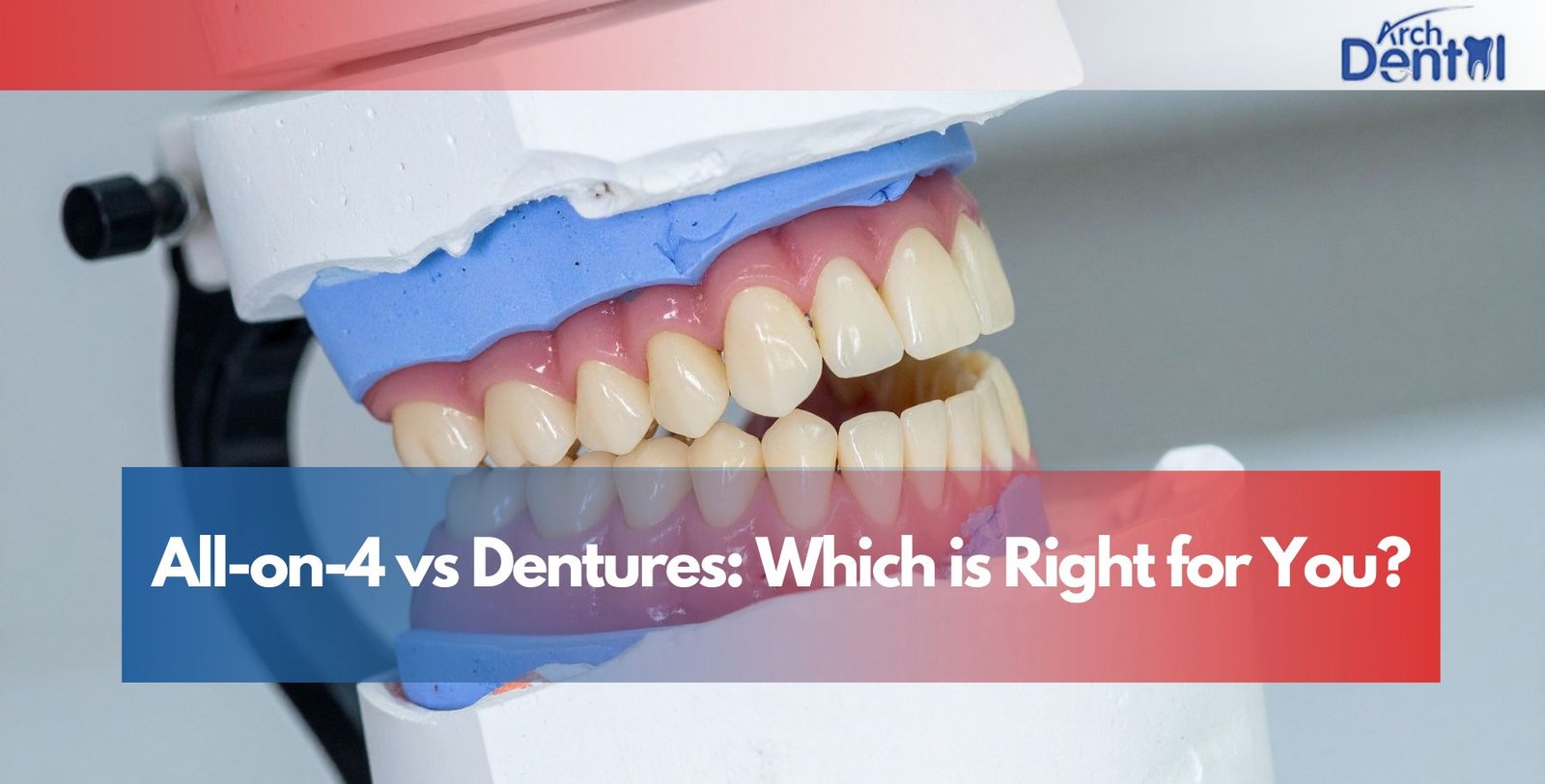
Traditional dentures have served as the standard solution for missing teeth for decades, offering a removable prosthetic option that replaces an entire arch of upper or lower teeth. These custom-made appliances consist of artificial teeth set in a gum-colored acrylic or resin base designed to rest directly on your gum tissue and underlying jawbone ridge.
Complete dentures replace all teeth in an arch, while partial dentures fill gaps when some natural teeth remain. The upper denture typically covers the palate (roof of your mouth) and relies on suction for retention, while lower dentures rest on the horseshoe-shaped ridge and are held in place by tongue position, cheek muscles, and sometimes denture adhesive. Modern dentures have evolved significantly from the artificial-looking options of the past, with today’s versions offering much more natural aesthetics and improved functionality.
The process of receiving traditional dentures typically begins after tooth extraction or when existing teeth can no longer be saved. Your dentist in Northampton, MA takes detailed impressions of your gums and any remaining teeth to create a custom-fitted prosthetic. Temporary or immediate dentures may be placed right after extractions, though conventional dentures typically require waiting several months for complete gum and bone healing before final fitting.
Types of Dentures Available
Several denture variations exist to accommodate different patient needs and circumstances. Conventional full dentures are fabricated after all teeth have been removed and tissues have completely healed, typically taking 8-12 weeks following extractions. These offer the best fit since they’re made after healing is complete, but patients must go without teeth during the healing period.
Immediate dentures are prepared in advance and placed immediately after tooth removal, ensuring you never go without teeth. However, bones and gums shrink during healing, requiring multiple adjustments and eventual relining or remake. Overdentures fit over a small number of remaining natural teeth or dental implants, providing additional stability and preserving some bone structure.
The Adjustment Period with Dentures
Adapting to new dentures requires patience, as they feel foreign initially and affect speaking and eating. Most patients need several weeks to become comfortable with their dental prosthetics. Initial challenges include increased saliva production, minor irritation or sore spots, difficulty pronouncing certain words, and a gagging sensation, particularly with upper dentures covering the palate.
Eating with new dentures demands practice, starting with soft foods cut into small pieces and gradually progressing to more challenging textures. Many patients never regain their full biting force, with denture wearers typically achieving only 25-30% of the chewing efficiency of natural teeth, affecting food choices and nutritional intake over time.
Maintenance and Care Requirements
Denture care involves daily cleaning to remove food particles, plaque, and prevent staining. Remove and rinse dentures after eating, brush them daily with a soft-bristled brush and non-abrasive denture cleaner (never regular toothpaste, which is too abrasive), and soak them overnight in a denture-cleaning solution to maintain shape and remove bacteria.
Your gums also need attention—brush them gently with a soft toothbrush before inserting dentures to stimulate circulation and remove plaque. Regular dental checkups remain essential for examining oral tissues for irritation, infections, or other problems, and ensuring proper denture fit as your mouth changes over time.
Lifespan and Replacement Considerations
Traditional dentures typically last 5-8 years before requiring replacement, though this varies based on care quality and biological changes in your mouth. Bone resorption—the gradual loss of jawbone density that occurs after tooth loss continues beneath dentures, causing them to become loose over time and requiring periodic relining to improve fit.
Most denture wearers need relining every 1-2 years to compensate for gum and bone changes. This process adds new base material to the denture’s tissue-facing side, improving fit and comfort. Eventually, even with relining, dentures wear out or no longer fit properly due to extensive bone loss, necessitating complete replacement.
Advantages of Traditional Dentures
Dentures in Northampton, MA offer several compelling benefits, particularly their non-surgical nature appealing to patients who cannot or prefer not to undergo oral surgery. The initial cost is significantly lower than implant options, making dentures accessible to more patients, especially those with limited budgets or without comprehensive dental insurance coverage.
The fabrication process is relatively quick, with patients receiving their prosthetics within weeks rather than months. Dentures can be adjusted, repaired, or replaced relatively easily and inexpensively if damaged. For patients with significant bone loss who aren’t candidates for implants without extensive bone grafting, dentures may represent the only viable option.
Disadvantages and Limitations
Despite their accessibility, dentures present notable drawbacks affecting quality of life. They can slip while eating or speaking, causing embarrassment and requiring constant awareness and adjustment. The reduced chewing efficiency limits food choices, with many wearers avoiding tough meats, raw vegetables, and crunchy foods, potentially impacting nutrition and enjoyment of meals.
Dentures don’t prevent ongoing bone loss; in fact, the pressure they exert may accelerate bone resorption, gradually changing facial structure and creating a sunken, aged appearance over time. Many patients experience discomfort, sore spots, or gum irritation, particularly when dentures don’t fit well. The daily removal and cleaning routine, along with potential need for messy adhesives, proves inconvenient for some individuals.
Cost Considerations for Dentures
Traditional dentures represent the most economical full-arch replacement option, with complete dentures typically ranging from $1,000 to $3,000 per arch for basic versions, while premium dentures with superior aesthetics and materials cost $4,000-$8,000 per arch. These prices usually include extractions, impressions, fittings, and initial adjustments.
However, long-term costs accumulate through adhesives, cleaning solutions, periodic relining ($300-$500), and eventual replacement every 5-8 years. Many dental insurance plans provide partial coverage for dentures, typically covering 50% of costs after deductibles, making them financially accessible for most patients needing full-arch restoration.
Exploring the All-on-4 Dental Implant System
The All-on-4 treatment concept revolutionized full-arch restoration by providing a fixed, permanent solution that closely mimics natural teeth in function and appearance. This innovative technique uses just four strategically placed dental implants per arch to support a complete set of prosthetic teeth, eliminating the need for individual implants for each missing tooth.
The “4” in All-on-4 refers to the four titanium implant posts surgically placed into the jawbone two positioned vertically at the front of the jaw where bone density is typically highest, and two angled up to 45 degrees at the back to maximize contact with available bone and avoid anatomical structures like sinuses and nerves. This strategic angulation allows many patients with moderate bone loss to receive implants without preliminary bone augmentation procedures.
What makes All-on-4 particularly appealing is the immediate load protocol, meaning a temporary prosthetic can often be attached the same day as implant placement, allowing you to leave the surgical appointment with functional teeth. Over 3-6 months, the implants undergo osseointegration fusing with surrounding bone tissue—before receiving the final, permanent prosthetic customized for optimal aesthetics and function.
The All-on-4 Surgical Procedure
The All-on-4 procedure typically occurs in a single surgical session performed under local anesthesia, IV sedation, or general anesthesia depending on patient preference and anxiety levels. If you have remaining teeth, they’re extracted first, then the four implant sites are precisely positioned using 3D imaging and surgical guides to ensure optimal placement angles and depths.
After implant insertion, abutments (connector pieces) are attached, and impressions are taken for fabricating the prosthetic arch. In many cases, a temporary prosthetic is secured the same day, providing immediate functionality and aesthetics while healing occurs. This teeth-in-a-day approach minimizes the time patients spend without teeth and allows them to maintain their normal appearance and basic eating functions throughout recovery.
Recovery and Healing Timeline
Initial recovery from All-on-4 surgery typically involves 7-14 days of swelling, bruising, and discomfort managed with prescribed pain medications and ice packs. Patients must follow a soft food diet for several weeks, gradually introducing firmer textures as healing progresses and comfort allows, but avoiding extremely hard or sticky foods during the critical osseointegration period.
The complete healing process spans 3-6 months as implants integrate with bone tissue. During this time, you’ll wear the temporary prosthetic and attend follow-up appointments for monitoring healing progress and making any necessary adjustments. Once osseointegration is confirmed through clinical examination and possibly imaging, the final custom prosthetic is fabricated and secured, completing the restoration.
Maintenance and Long-Term Care
All-on-4 prosthetics require diligent oral hygiene similar to natural teeth but with special attention to the area where the prosthetic meets the gums. Daily brushing with a soft-bristled brush, using interdental brushes or water flossers to clean beneath the prosthetic, and potentially using antimicrobial rinses help prevent peri-implantitis—an infection around implants that can lead to bone loss and implant failure.
Professional maintenance includes regular checkups every 3-6 months for thorough cleaning, examination of soft tissues around implants, checking prosthetic stability, and potentially taking X-rays to monitor bone levels around implants. Unlike dentures requiring nightly removal, All-on-4 prosthetics remain fixed in your mouth, functioning like natural teeth and requiring no special removal, soaking, or adhesive application.
Expected Lifespan and Durability
Dental implants themselves, when properly cared for, can last 25 years or even a lifetime, with success rates exceeding 95% in healthy patients who maintain good oral hygiene. The prosthetic teeth attached to the implants typically last 10-15 years before needing replacement due to normal wear, though the implants themselves remain and only the visible teeth portion requires renewal.
Factors affecting longevity include oral hygiene quality, smoking status (smokers have higher failure rates), systemic health conditions like diabetes, bruxism (teeth grinding) which may require protective nightguards, and adherence to regular professional maintenance appointments. The fixed nature of All-on-4 prevents the bone loss that continues with dentures, actually preserving facial structure and preventing the sunken appearance many long-term denture wearers develop.
Major Benefits of All-on-4 Implants
All-on-4 offers transformative advantages over removable dentures, primarily the stable, permanent nature of the restoration that never slips, requires no adhesive, and allows confident speaking, laughing, and eating. Chewing efficiency approaches that of natural teeth approximately 80-90% enabling patients to enjoy a full, unrestricted diet including tough meats, raw vegetables, and crunchy foods.
The psychological benefits prove equally significant: All-on-4 patients report dramatically improved confidence, quality of life, and freedom from the anxiety and embarrassment associated with denture slippage. The prosthetics look and feel like natural teeth, and most people won’t realize you have a restoration. Additionally, by preventing ongoing bone loss, All-on-4 preserves facial structure and maintains a more youthful appearance long-term.
Drawbacks and Limitations of All-on-4
Despite numerous advantages, All-on-4 presents some limitations and considerations. The procedure requires oral surgery with associated risks including infection, nerve damage, sinus complications, or implant failure requiring removal and potential replacement. Patients must be healthy enough for surgery, with controlled conditions like diabetes, and preferably be non-smokers for optimal success.
Not everyone qualifies for All-on-4; severe bone loss, certain medical conditions, or poor oral hygiene may disqualify candidates or require preliminary treatments. The initial time investment includes surgery, recovery, and multiple follow-up appointments over several months. While the prosthetics are durable, they can break or chip, particularly in patients who grind their teeth, requiring repairs that may be more complex than simple denture fixes.
Financial Investment in All-on-4
All-on-4 represents a significant financial investment, with costs typically ranging from $20,000 to $30,000 per arch, or $40,000-$60,000 for a full-mouth restoration. This price usually includes surgical planning, implant placement, temporary prosthetics, final custom prosthetics, and follow-up care during the first year, though additional costs may arise for extractions, sedation, or complications.
Most dental insurance plans provide limited or no coverage for implant dentistry, considering it elective or cosmetic despite the functional and health benefits. However, some plans may cover a portion equivalent to what they’d pay for dentures. Many dental practices offer financing plans, and considering the longevity and quality-of-life improvements, the cost-per-year over the lifespan of All-on-4 may actually be comparable to or less than repeatedly replacing traditional dentures.
Conclusion
Deciding between All-on-4 and traditional dentures ultimately depends on multiple factors unique to your situation, including health status, lifestyle preferences, budget considerations, and long-term goals. Neither option is universally “better” ; rather, each serves different needs and circumstances, with the right choice varying from person to person based on individual priorities and constraints.
Consider your health status and surgical candidacy: Are you healthy enough for implant surgery? Do you have conditions like uncontrolled diabetes, active periodontal disease, or take medications affecting bone healing that might complicate implants? Evaluate your lifestyle and priorities: How important is biting force and dietary freedom? Do you prioritize convenience and avoiding removal routines? How much does the security of a fixed solution matter to your confidence and quality of life?
Financial considerations play a crucial role: Can you manage the upfront investment of All-on-4, or do you need the more accessible initial cost of dentures? Do you have insurance coverage, health savings accounts, or access to favorable financing terms? Don’t forget to consider long-term costs, including maintenance, adjustments, and eventual replacement when calculating total expense over time. Consulting with experienced dental professionals who offer both options ensures you receive unbiased guidance based on comprehensive examination of your oral health, bone structure, and overall medical condition.