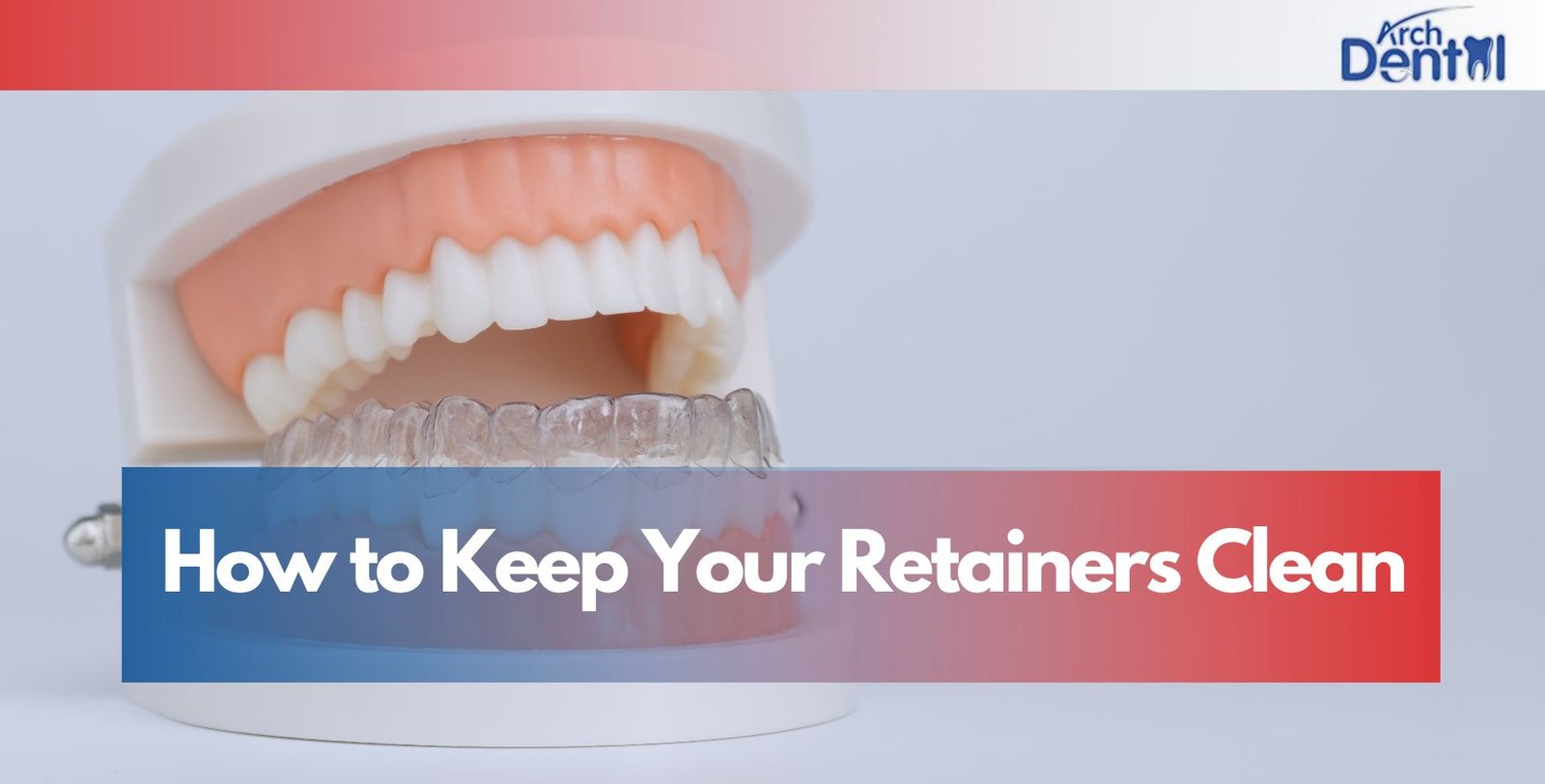
Keeping your retainers clean is one of the easiest ways to protect your smile after orthodontic treatment. When retainers stay fresh and clear, your teeth stay healthy, your breath stays clean, and your results last longer. Many people wear retainers every day without realising how fast bacteria, plaque, and odour can build up.
A good cleaning routine makes a huge difference — not just for comfort, but for the health of your teeth and gums. In this guide from the dental team at Arch Dental Northampton, you’ll learn simple daily steps, the safest deep cleaning methods, what to avoid, and tips that help your retainers stay fresh without damaging them.
This guide covers all three main retainer types: clear (Essix/Invisalign-style) retainers, Hawley wire retainers, and permanent bonded retainers. Find the section that matches yours and follow the steps consistently.
Why Cleaning Your Retainers Matters
Healthy retainers protect your mouth. A retainer sits against your teeth and gums for hours at a time, collecting plaque, food debris, and bacteria. If you don’t clean it well, it can cause bad breath, irritation, and even staining on your teeth. When you follow a steady cleaning routine, your retainer stays clear, odour-free, and comfortable.
Most people don’t realise that a dirty retainer can also lose its shape over time as mineral deposits build up on the surface, which can subtly affect fit and alignment. A clean retainer doesn’t just feel better — it lasts longer and works better.
How Dirty Retainers Affect Your Oral Health
A retainer that isn’t cleaned every day can trap bacteria that sit directly on your enamel for hours. This raises your risk of cavities, gum inflammation, and mouth irritation. Many people think rinsing with water is enough, but water alone doesn’t remove plaque or biofilm. According to the American Association of Orthodontists, improper retainer care is one of the leading causes of early retainer replacement and can compromise the alignment results you worked hard to achieve.
Why Retainer Odour Develops
Bad smells come from bacteria that multiply quickly on appliance surfaces. When saliva dries on the surface, it becomes a film that traps odour. Cleaning your retainer removes this buildup so you don’t notice any taste or smell when wearing it. If a strong smell persists despite regular cleaning, it’s worth bringing your retainer to your next appointment so we can assess whether the material has degraded or if there’s a bacterial issue worth addressing.
Daily Cleaning Routine for Retainers
A simple daily routine is the best way to avoid buildup. You don’t need special tools — just consistency. The goal is to keep the surface clear of plaque and keep the retainer from drying out between wears.
Rinse Your Retainer Every Time You Remove It
Always rinse your retainer under lukewarm water immediately after taking it out. This washes away saliva and soft debris before it dries on the surface. Hot water is the enemy here — even brief exposure to high heat can permanently warp your retainer, especially clear plastic styles.
Brush Gently With a Soft Toothbrush
Use a soft-bristled toothbrush with gentle, circular strokes. Harsh scrubbing or stiff bristles can scratch your retainer and create tiny grooves where bacteria thrive and odour develops. This is also why you should avoid regular toothpaste, most formulas contain abrasive particles designed for hard enamel, which is far too aggressive for acrylic or clear plastic.
Let Your Retainer Air Dry Before Storing
Place it on a clean, dry surface for a few minutes before putting it back in the case. Air-drying stops moisture from creating a bacteria-friendly environment inside the case. A dry retainer also feels more comfortable when you put it back in.
Deep Cleaning Methods for Retainers
Daily brushing handles fresh plaque, but deep cleaning removes the mineralised buildup that regular rinsing can’t reach. These methods are safe for most removable retainers. If you have a permanent bonded retainer, skip to that section below.
Using a Retainer Cleaning Tablet
Cleaning tablets are one of the most popular and effective options. They dissolve plaque and bacteria without damaging plastic or acrylic. Drop one tablet into a glass of lukewarm water, soak your retainer for the recommended time (typically 15–20 minutes), and rinse thoroughly afterward. Brands like Retainer Brite, Polident, and Efferdent are widely used. For best results, do this every few days rather than relying on it as your only cleaning method. The American Dental Association recommends following manufacturer instructions carefully on soaking times to avoid material degradation.
Soaking With Mild Dish Soap
A few drops of mild, clear (unscented) dish soap mixed with lukewarm water removes oils and the cloudy film that builds up over time. Use a soft brush to reach all the small corners and grooves. This method is gentle enough for daily use and won’t harm the material of any standard retainer.
White Vinegar for Mineral Buildup
If your retainer looks cloudy, minerals from saliva have likely hardened on the surface. Soaking it in a 1:1 mixture of white vinegar and lukewarm water helps loosen these deposits. Soak for 15–20 minutes, brush lightly, and rinse thoroughly to remove the vinegar taste before wearing. Don’t exceed 20 minutes, prolonged exposure to vinegar’s acidity can weaken some plastic materials over time.
Baking Soda Soak for Odour
Baking soda neutralises odour safely and effectively. Mix one teaspoon into a cup of water, soak the retainer for 15 minutes, then brush gently with a soft toothbrush and rinse well. This is a good option when you notice smell building up between your regular deep cleaning sessions.
What Not to Use on Your Retainers
Some cleaning approaches seem practical but can seriously damage your retainer. Knowing what to avoid protects your investment.
Avoid Toothpaste — Toothpaste feels gentle on teeth, but it is far too abrasive for plastic or acrylic retainers. Over time, the surface becomes scratched and permanently cloudy.
Avoid Alcohol or Bleach — Strong chemicals weaken the plastic structure and can leave a harsh chemical taste that’s difficult to fully remove. These products also irritate your gums and oral mucosa.
Avoid Boiling Water — Heat permanently changes the shape of retainers, especially clear aligner-style appliances. Even one exposure to boiling or very hot water can cause warping that makes the retainer unwearable.
Avoid Mouthwash With Alcohol — While alcohol-free mouthwash is generally safe for a short rinse, leaving a retainer to soak in standard mouthwash (which often contains alcohol) can discolour and weaken the material.
Avoid Harsh Scrubbing Tools — Hard brushes, electric toothbrush heads, and rough cloths all create micro-scratches that become breeding grounds for bacteria.
How to Clean Clear Retainers (Essix / Invisalign-Style)
Clear retainers are the most common type given after orthodontic treatment and after Invisalign. They need extra care because the thin plastic scratches easily and clouds quickly if mishandled. If you want them to stay invisible and odour-free, consistency matters more than the product you use.
Use only mild cleaners, cleaning tablets or mild dish soap work best. Anything abrasive or solvent-based will damage the plastic and make it permanently cloudy. Brush with slow, gentle strokes using a soft toothbrush. Scratching the inner surface makes the retainer more likely to trap bacteria, which leads to bad breath and faster staining. Keep them away from staining foods and drinks — turmeric, coffee, tea, and berries can all leave colour in the plastic. Always remove your retainer before eating or drinking anything other than water.
If your clear retainer has become cloudy despite cleaning, it may have reached the end of its useful life. Clouding that doesn’t clear up with a proper soak is usually mineral etching in the plastic. Talk to our Northampton dental team about whether a replacement is needed.
How to Clean Wire (Hawley) Retainers
Hawley retainers are more durable than clear retainers, but they still collect plaque and odour, particularly in the acrylic base and along the metal wire where it contacts your teeth.
Brush the acrylic base thoroughly — The acrylic base collects the most plaque. Brush it with mild soap and lukewarm water using a soft toothbrush, paying attention to the inner surface that rests against your palate.
Clean around the metal wires carefully — Wires trap debris more than people realise. Use gentle, careful motions to clean around each wire without bending or distorting it. A soft interdental brush can help reach the tight spots where the wire meets the acrylic.
Soak weekly to remove hidden buildup — Once a week, soak your Hawley retainer in a cleaning tablet solution or the white vinegar mixture described above. This reaches the areas a brush can’t fully access.
How to Clean a Permanent (Bonded) Retainer
Permanent retainers — the thin wire bonded to the back of your lower (or sometimes upper) front teeth, are the most overlooked type when it comes to cleaning. Because you can’t remove them, they require a different approach, and many patients aren’t sure where to start.
Floss daily around the wire — This is the most important step. Use a floss threader or orthodontic floss to thread regular floss behind the wire and clean each tooth surface individually. Water flossers like a Waterpik are also excellent for flushing out debris from around the wire and along the gum line. The American Dental Association recommends floss threaders or interdental brushes specifically for permanent retainer wearers.
Brush along the wire’s contact points — After flossing, brush along the gum line at the back of your lower front teeth with a soft toothbrush, angling the brush to reach underneath the wire where it contacts each tooth.
Use an interdental brush between the wire and gum — Small interdental brushes (sometimes called proxy brushes) are ideal for the tiny gap between the wire and your gum tissue. This is where plaque and tartar tend to accumulate most quickly.
Visit your dentist regularly for professional cleaning — Even with excellent home care, tartar will build up around a bonded retainer over time and needs professional removal. Make sure to mention your permanent retainer when you arrive so the hygienist gives it proper attention during your cleaning. If you haven’t had a cleaning recently, book your appointment at Arch Dental Northampton.
How to Remove Retainer Odour
Bad odour is one of the most common concerns patients ask about. The good news is that most smells come from bacterial buildup and are entirely preventable with consistent care.
Soak in a baking soda solution — Mix one teaspoon into a cup of lukewarm water and soak for 15 minutes, then brush gently. This neutralises odour at the source.
Clean the case — not just the retainer — A dirty case transfers bacteria back onto a freshly cleaned retainer every single time you store it. Wash your case daily with mild soap, rinse well, and let it air dry completely before storing your retainer.
Keep your mouth clean — Even the cleanest retainer will develop odour quickly if your oral hygiene is poor. Brushing and flossing before inserting your retainer each time prevents bacteria from transferring to the appliance. This is especially important after eating.
Check if the material has degraded — If odour persists despite diligent cleaning over several weeks, the retainer material itself may have developed micro-cracks where bacteria are embedded too deeply to reach with surface cleaning. This is a sign it’s time for a replacement.
How Often Should You Replace Your Retainer?
Even with excellent care, retainers gradually wear out. Knowing when to replace them helps maintain your alignment results and overall comfort.
Clear Essix retainers typically last between 6 months and 2 years depending on how often they’re worn and how carefully they’re handled. Hawley wire retainers can last many years, sometimes a decade or more, with proper care. Permanent bonded retainers can last 10 or more years but should be inspected at every dental visit to check that the bonding on each tooth is intact.
Look for cracks, chips, or a loose fit that affects how well the retainer holds your alignment. If anything feels different — looser, tighter, or uncomfortable — get it checked before assuming it’s fine. Some stains cannot be removed completely. If the retainer looks permanently cloudy or yellow even after deep cleaning, it’s time for a replacement. If you grind your teeth, retainers wear down much faster. If you notice flattening of the biting surface or rough edges, speak to your orthodontist about a stronger or thicker appliance. Learn more about orthodontic and retainer services at Arch Dental Northampton.
Tips to Keep Your Retainer Safe
Cleaning helps, but retainer care also means protecting it from damage. Many retainers break or disappear due to completely avoidable accidents.
Always store it in its case, never wrap it in a tissue or napkin. Patients and their families accidentally throw away wrapped retainers far more often than you’d think. Keep it away from pets, dogs in particular are attracted to retainers because they carry your scent. Keep your case in a drawer or on a high shelf. Avoid leaving it in a hot car, even on a mildly warm day, the temperature inside a parked car can reach levels that permanently warp all types of plastic retainers. Don’t clean it near a sink without plugging the drain, retainers are small and can slip out of your hands easily.
Conclusion
A clean retainer is essential for keeping your smile stable, your breath fresh, and your orthodontic results intact. Whether you wear a clear Essix retainer, a Hawley wire retainer, or a permanent bonded retainer, the steps are straightforward — daily rinsing, light brushing with the right tools, regular deep soaking, and careful storage. The routine takes only a few minutes a day and makes a clear difference in comfort, freshness, and how long your retainer lasts.
If your retainer feels uncomfortable, smells persistently despite cleaning, looks cracked or cloudy, or simply doesn’t fit the way it used to, don’t wait. Contact the dental team at Arch Dental Northampton to get it assessed and replaced if needed. Protecting the results of your orthodontic treatment is always worth it.
Frequently Asked Questions
How often should I clean my retainers?
You should rinse your retainer with lukewarm water every single time you remove it. Light brushing with a soft toothbrush should happen at least once daily. A deeper soak using cleaning tablets, mild dish soap, or a baking soda solution should happen every 2–3 days. This combination keeps plaque and odour under control without requiring much time.
Can I use toothpaste to clean my retainers?
No — toothpaste is too abrasive for plastic and acrylic retainers. Even toothpastes marketed as gentle contain micro-abrasives designed for tooth enamel, which is much harder than retainer material. Regular use of toothpaste will scratch and cloud your retainer over time, creating grooves where bacteria accumulate.
Can I use mouthwash to clean my retainer?
You can briefly rinse a removable retainer with alcohol-free mouthwash, but you should never soak it in mouthwash. Many mouthwashes contain alcohol, which can weaken and discolour plastic over time. Mouthwash also doesn’t effectively remove the plaque biofilm on a retainer, brushing and soaking do that job better.
What is the best way to remove bad odour from retainers?
A baking soda soak (one teaspoon in a cup of lukewarm water for 15 minutes) is the most effective home method for neutralising retainer odour. Equally important, clean your retainer case daily and make sure your oral hygiene is thorough before inserting the retainer. If odour persists after consistent cleaning, the material may have degraded and a replacement could be needed.
How do I clean a permanent bonded retainer?
Permanent retainers cannot be removed, so cleaning requires a floss threader or orthodontic floss to thread between each tooth behind the wire, combined with careful brushing along the gum line. A water flosser is also very effective for flushing debris from around the wire. Professional cleaning at regular dental visits is essential to remove tartar that accumulates around the wire over time.
Can I use hydrogen peroxide to clean my retainer?
A diluted hydrogen peroxide rinse (one part hydrogen peroxide to two parts water) can be used occasionally as a disinfecting rinse. However, it should not be your primary cleaning method, and you should never soak a retainer in undiluted hydrogen peroxide, as it can bleach and weaken the plastic material.
What is the best retainer cleaner?
The most widely recommended options are effervescent cleaning tablets (Retainer Brite, Polident, Efferdent), mild unscented dish soap, and baking soda soaks. For clear retainers, tablets are particularly effective because they reach the inner surface without any scrubbing. For Hawley retainers, combining mild soap brushing with a weekly tablet soak works very well. Avoid anything with alcohol, bleach, or abrasive particles.
How long do retainers usually last?
Clear Essix-style retainers typically last between 6 months and 2 years with daily wear. Hawley wire retainers can last many years — sometimes a decade or more, with careful maintenance. Permanent bonded retainers can last 10 years or longer but need regular monitoring by your dentist to ensure the bonding on each tooth remains secure.
Should I clean my retainer before putting it in?
Yes. You should rinse your retainer before inserting it each time, especially if it’s been stored in its case for several hours. This removes any residual bacteria that accumulated during storage and ensures you’re placing something clean against your teeth and gums.
Can hot water damage my retainers?
Yes, significantly. Heat warps all types of plastic retainers, especially clear Essix-style appliances. Even water that feels warm but not scalding can cause permanent distortion over time. Always use lukewarm water — never hot, and never boiling.
Why does my retainer still smell even after cleaning?
If you’re cleaning consistently but odour persists, check three things: whether your case is being cleaned and dried properly (a dirty case recontaminates a clean retainer instantly), whether your oral hygiene before inserting the retainer is thorough, and whether the retainer material has developed micro-cracks where bacteria embed too deeply for surface cleaning to reach. If the smell has been there for several weeks despite good care, bring the retainer in for a professional assessment.
How do I know when to replace my retainer?
Signs it’s time for a replacement include visible cracks or chips, a loose or noticeably different fit, clouding that won’t clear up with soaking, persistent odour that doesn’t improve with cleaning, and flattening or rough edges (especially in patients who grind their teeth). If you’re unsure, bring it to your appointment at Arch Dental Northampton and we can advise you.