Wisdom teeth often cause problems when there is not enough space in the mouth. Many people ignore early signs because the pain comes and goes. That delay can lead to infection, damage to nearby teeth, and long healing times. Knowing the warning signs of wisdom tooth trouble helps you act early. This guide explains the symptoms, causes, and risks in clear terms, so you know when to see a dentist and what to expect next.
Early Symptoms You Should Not Ignore
Wisdom tooth problems usually start small. A dull ache. Mild swelling. Slight pressure at the back of the mouth. These early wisdom tooth symptoms are easy to dismiss. But they often mean the tooth is stuck or erupting at a bad angle. Acting early can prevent serious pain, infection, and costly treatment later.
Gum Pain at the Back of the Mouth
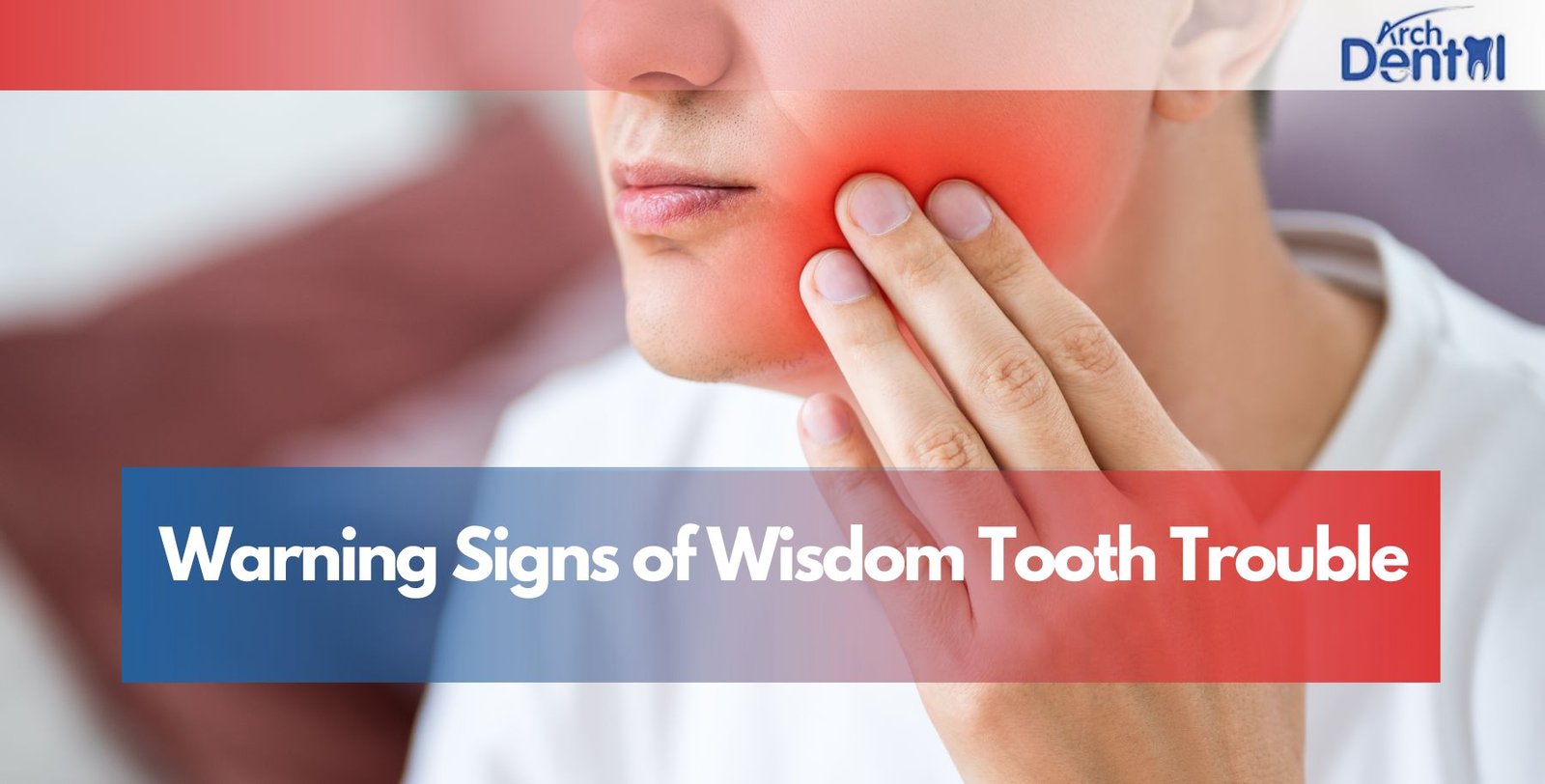
Pain behind the molars is one of the first signs of wisdom tooth problems. The gum tissue becomes tender as the tooth pushes through. Food can get trapped under the gum flap, causing irritation. The pain may feel mild at first, but it often grows worse over time, especially while chewing or brushing.
Swelling Around the Jaw
Swelling along the jawline or near the ear can signal impacted wisdom teeth. This swelling happens when tissue becomes inflamed or infected. You may notice tightness when opening your mouth. Even small swelling is a warning sign that should not be ignored.
Red or Bleeding Gums
Red, sore, or bleeding gums near the wisdom tooth often point to gum infection from wisdom teeth. The area is hard to clean, so plaque builds up fast. Bleeding during brushing is not normal and usually means inflammation that needs care.
Bad Taste or Bad Breath
A constant bad taste or chronic bad breath can come from trapped bacteria around a wisdom tooth. This is common when the tooth is partially erupted. It often signals early infection, even before strong pain starts.
Pain Patterns Linked to Wisdom Teeth
Wisdom tooth pain is not always sharp. It can feel dull, throbbing, or spread to other areas. Understanding these wisdom tooth pain patterns helps you tell normal soreness from a real problem.
Throbbing or Constant Ache
A steady ache that lasts for days is a common wisdom tooth pain symptom. It may worsen at night or when lying down. This pain often means pressure is building as the tooth pushes against bone or nearby teeth.
Pain While Chewing
Pain during chewing can signal that the wisdom tooth is pressing on nerves or other teeth. This chewing pain from wisdom teeth often comes with gum tenderness. Ignoring it can lead to cracks or decay in nearby molars.
Jaw Stiffness and Limited Opening
Jaw stiffness is a sign of inflammation. Many patients notice trouble opening their mouth fully. This is linked to jaw pain from wisdom teeth and may indicate infection spreading into nearby tissues.
Headaches Linked to Tooth Pressure
Wisdom teeth can cause tension headaches. The pressure from an impacted tooth can irritate nerves, leading to headaches from dental pain. These headaches often start near the temples and feel different from normal stress headaches.
Signs of Infection and Serious Complications
When wisdom teeth become infected, symptoms escalate fast. Infection can spread to the jaw, sinuses, or bloodstream. Recognizing wisdom tooth infection signs early is critical.
Pus or Discharge Near the Tooth
White or yellow discharge near the gum is a clear sign of wisdom tooth infection. It often comes with swelling and pain. This needs urgent dental care to stop the infection from spreading.
Fever and General Fatigue
A low-grade fever with mouth pain suggests the body is fighting infection. Fatigue and weakness can appear too. These systemic infection symptoms mean the problem is no longer local and needs prompt treatment.
Swollen Lymph Nodes
Tender lumps under the jaw or in the neck often show the immune system is responding to infection. Swollen lymph nodes with tooth pain are strong infection warning signs.
Difficulty Swallowing
Trouble swallowing or breathing is rare but serious. It can happen when infection spreads. This is a dental emergency and requires immediate care.
Problems Caused by Impacted Wisdom Teeth
An impacted wisdom tooth cannot fully erupt. This leads to pressure, decay, and misalignment. Many long-term dental issues start here.
Damage to Nearby Teeth
Impacted wisdom teeth often push against second molars. This causes tooth crowding and increases decay risk. The pressure can weaken enamel and lead to cavities.
Increased Risk of Cavities
Because wisdom teeth are hard to clean, plaque builds up easily. This raises the risk of tooth decay from wisdom teeth, both on the wisdom tooth and nearby molars.
Gum Disease Development
Chronic inflammation around impacted teeth can lead to periodontal disease. Over time, this damages bone and gums, risking tooth loss.
Cyst or Tumor Formation
In rare cases, impacted teeth cause cysts. These fluid-filled sacs can damage bone. Early removal prevents jaw bone damage and complex surgery.
When Wisdom Teeth Affect Other Areas
Wisdom tooth issues do not stay in one place. Pain and infection can spread. Many patients are surprised by these indirect signs.
Ear Pain Without Ear Infection
Ear pain can come from shared nerve pathways. Wisdom tooth ear pain is common and often mistaken for an ear issue. Dental exams help identify the real cause.
Sinus Pressure and Pain
Upper wisdom teeth sit close to the sinuses. Inflammation can cause sinus pain from wisdom teeth, leading to pressure and congestion.
Neck and Shoulder Discomfort
Muscle tension from jaw inflammation can spread. This causes neck stiffness and shoulder pain linked to jaw strain.
Changes in Bite Alignment
Pressure from erupting wisdom teeth can shift other teeth. This leads to bite problems and uneven wear.
When to See a Dentist
Timing matters. Waiting too long increases risk and recovery time. Knowing when to act protects your oral health.
Pain Lasting More Than Two Days
Persistent pain is not normal. If wisdom tooth pain lasts more than two days, see a dentist for evaluation.
Swelling That Does Not Go Down
Ongoing swelling suggests infection or impaction. Early treatment avoids surgery complications.
Trouble Opening Your Mouth
Limited jaw movement is a red flag. It often means inflammation or infection spreading.
Repeated Gum Infections
Recurring gum issues around the same tooth usually mean the wisdom tooth needs removal.
Treatment Options for Wisdom Tooth Problems
Treatment depends on severity. Early care is simpler and less painful.
Monitoring and Imaging
Dentists use X-rays to track tooth position. Monitoring helps decide the right time for treatment.
Medications for Infection
Antibiotics and pain relief can control symptoms. But they do not fix the root cause.
Wisdom Tooth Extraction
Removal is the most common solution. Wisdom tooth extraction prevents future problems and protects nearby teeth.
Recovery and Aftercare
Proper aftercare speeds healing. Following instructions reduces swelling and infection risk.
Conclusion
Wisdom tooth problems rarely fix themselves. Early warning signs are your body’s way of asking for help. Ignoring pain, swelling, or infection can lead to serious issues that affect your whole mouth. Regular checkups and timely treatment keep small problems from turning big. If you notice any of these symptoms, speak with a trusted Dentist in Northampton, MA.
FAQs
What are the first signs of wisdom teeth problems?
Early signs include mild pain at the back of the mouth, swollen gums, bad taste, and jaw stiffness.
How to relieve wisdom tooth pain while pregnant?
Use cold compresses, gentle saltwater rinses, and pregnancy-safe pain relief after consulting a dentist or doctor.
How to tell if a wisdom tooth is coming in wrong?
Ongoing pain, swelling, crowding, or X-ray findings usually show a misaligned wisdom tooth.
Can a wisdom tooth cause ear pain?
Yes. Shared nerves can cause ear pain even when the ear itself is healthy.
What organ do wisdom teeth affect?
Wisdom teeth mainly affect the mouth and jaw, but infection can impact sinuses and overall health if untreated.